On June 6, 1944, the largest amphibious invasion in history took place on the shores of Normandy, France. Among the five Allied landing beaches—Utah, Omaha, Gold, Juno, and Sword—Utah Beach played a crucial yet often understated role in the success of Operation Overlord. While Omaha Beach is remembered for its fierce resistance and heavy casualties, Utah Beach stands as a testament to adaptability, courage, and strategic brilliance.
The Strategic Importance of Utah Beach
Located on the Cotentin Peninsula, Utah Beach was the westernmost of the D-Day landing zones. Its primary objective was to secure a foothold for Allied forces, cut off German reinforcements, and eventually capture the critical port of Cherbourg. Unlike Omaha Beach, where American forces faced devastating losses, Utah Beach saw relatively lighter resistance—but its success was no accident.
Why Utah Beach?
- Proximity to Cherbourg: Capturing this deep-water port was essential for Allied supply lines.
- Weaker German Defenses: The area was less fortified compared to other beaches.
- Airborne Support: The U.S. 82nd and 101st Airborne Divisions dropped behind enemy lines to disrupt German reinforcements.
The Landings: A Story of Adaptation
The assault on Utah Beach was led by the U.S. 4th Infantry Division, under the command of Brigadier General Theodore Roosevelt Jr. (the son of President Theodore Roosevelt). At 56 years old, Roosevelt was the oldest man in the first wave and the only general to land by sea with his troops.
An Unexpected Turn of Events

Due to strong currents and poor visibility, the first wave of landing craft drifted over a mile south of their intended target. Instead of landing at “Tare Green” sector, they found themselves at “Victor” sector, a less-defended area.
Rather than retreating or attempting to reposition, Roosevelt made a historic decision: “We’ll start the war from right here!” This quick thinking minimized casualties and allowed troops to advance inland efficiently.
Success Against the Odds
By the end of D-Day:
- Casualties were light compared to Omaha—only 197 men out of 23,000 were killed or wounded.
- All key objectives were secured, including exits from the beach and linking up with airborne troops.
- Supplies and reinforcements flowed in smoothly, setting the stage for the liberation of Cherbourg.
Heroes of Utah Beach
Brigadier General Theodore Roosevelt Jr.
- Led from the front, rallying troops under fire.
- Awarded the Medal of Honor for his leadership (posthumously, as he died of a heart attack a month later).
The Paratroopers of the 101st & 82nd Airborne
- Dropped behind enemy lines in the early hours of D-Day.
- Secured causeways, destroyed bridges, and disrupted German counterattacks.
The Engineers & Naval Support
- Cleared obstacles under fire to allow landing craft access.
- Naval bombardments suppressed German defenses effectively.
Utah Beach Today: A Place of Remembrance
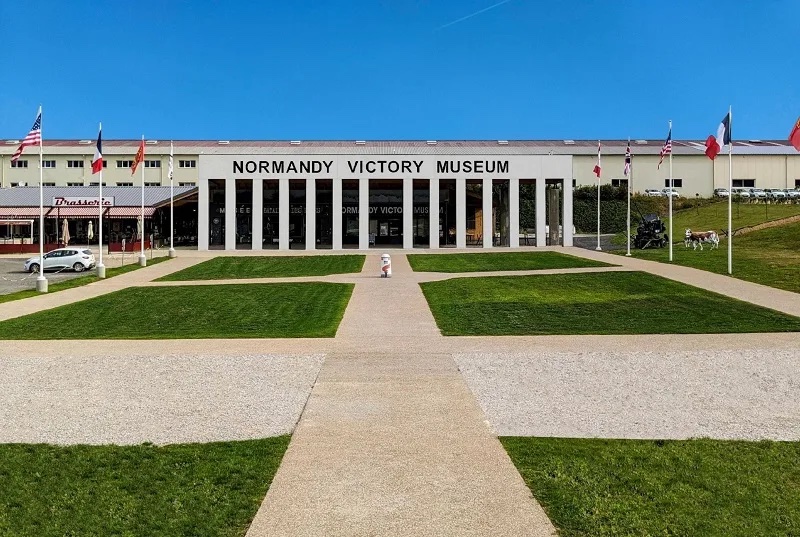
Visiting Utah Beach today is a powerful experience. The Utah Beach Museum stands as a tribute to the bravery of those who fought there, featuring:
- Original landing craft and equipment.
- Personal stories of soldiers and civilians.
- A restored B-26 Marauder bomber, used in the pre-invasion bombardments.
The beach itself remains peaceful, a stark contrast to the chaos of 1944. Yet the legacy of Utah Beach endures—a symbol of adaptability, courage, and the triumph of determination over adversity.
Final Thoughts: Why Utah Beach Matters
While Omaha Beach often dominates D-Day narratives, Utah Beach’s success was just as vital. It demonstrated the importance of flexibility in battle, the impact of strong leadership, and the power of teamwork between infantry, paratroopers, and naval forces.
For those who study history, Utah Beach serves as a reminder that even the best-laid plans can change—but victory belongs to those who adapt and persevere.
“We’ll start the war from right here.” — Brig. Gen. Theodore Roosevelt Jr.
Here are some authoritative and reliable links related to Utah Beach history:
Official Utah Beach Museum
- 🔗 https://www.utah-beach.com
- The best primary source for artifacts, veteran testimonies, and detailed historical accounts.
- Great for photos, maps, and timelines.
Normandy Tourism – Utah Beach
- 🔗 https://www.normandie-tourisme.fr/utah-beach/
- Offers insights into the significance of Utah Beach and related attractions in the area.
American Battle Monuments Commission (ABMC)
- 🔗 https://www.abmc.gov/Utah-Beach
- Official U.S. government site with casualty records, memorial details, and historical context.
- Helps verify key facts and numbers (e.g., casualty counts).
D-Day Overlord (Encyclopedia-Style Resource)
- 🔗 https://www.dday-overlord.com/en/d-day/beaches/utah-beach
- Detailed breakdown of troop movements, German defenses, and aftermath.
- Includes rare firsthand accounts and unit histories.
National WWII Museum (New Orleans)
- 🔗 https://www.nationalww2museum.org/war/articles/utah-beach
- Scholarly articles on strategy, leadership (like Roosevelt Jr.), and personal stories.
- Trusted source for educational content.
U.S. Army Center of Military History
- 🔗 https://history.army.mil/html/bookshelves/resmat/ww2eamet.html
- Official military reports on Utah Beach’s role in Operation Overlord.
- Good for tactical details (e.g., engineering challenges, naval support).
Bonus: Archival Footage (Public Domain)
- 🔗 https://www.archives.gov/research/military/ww2/d-day
- Original photos, maps, and film reels from the U.S. National Archives.